Answer first
MSDS reference WTH25D05134198B001 identifies the ETENWOLF P200 battery as a rechargeable 1S1P lithium-ion pack rated at 3.7 V, 2000 mAh, and 7.4 Wh. Under normal operating conditions the sealed pack is not expected to present a physical hazard. The risk changes if the casing is damaged, overheated, shorted, or leaking.
Hazards described by the MSDS
- Leaking electrolyte may irritate or injure skin and eyes.
- Vapour from a ruptured or burning cell may irritate the respiratory system.
- Swallowing electrolyte can damage tissue.
- A damaged pack can present fire, smoke, pressure, and environmental-release hazards.
Handling and storage
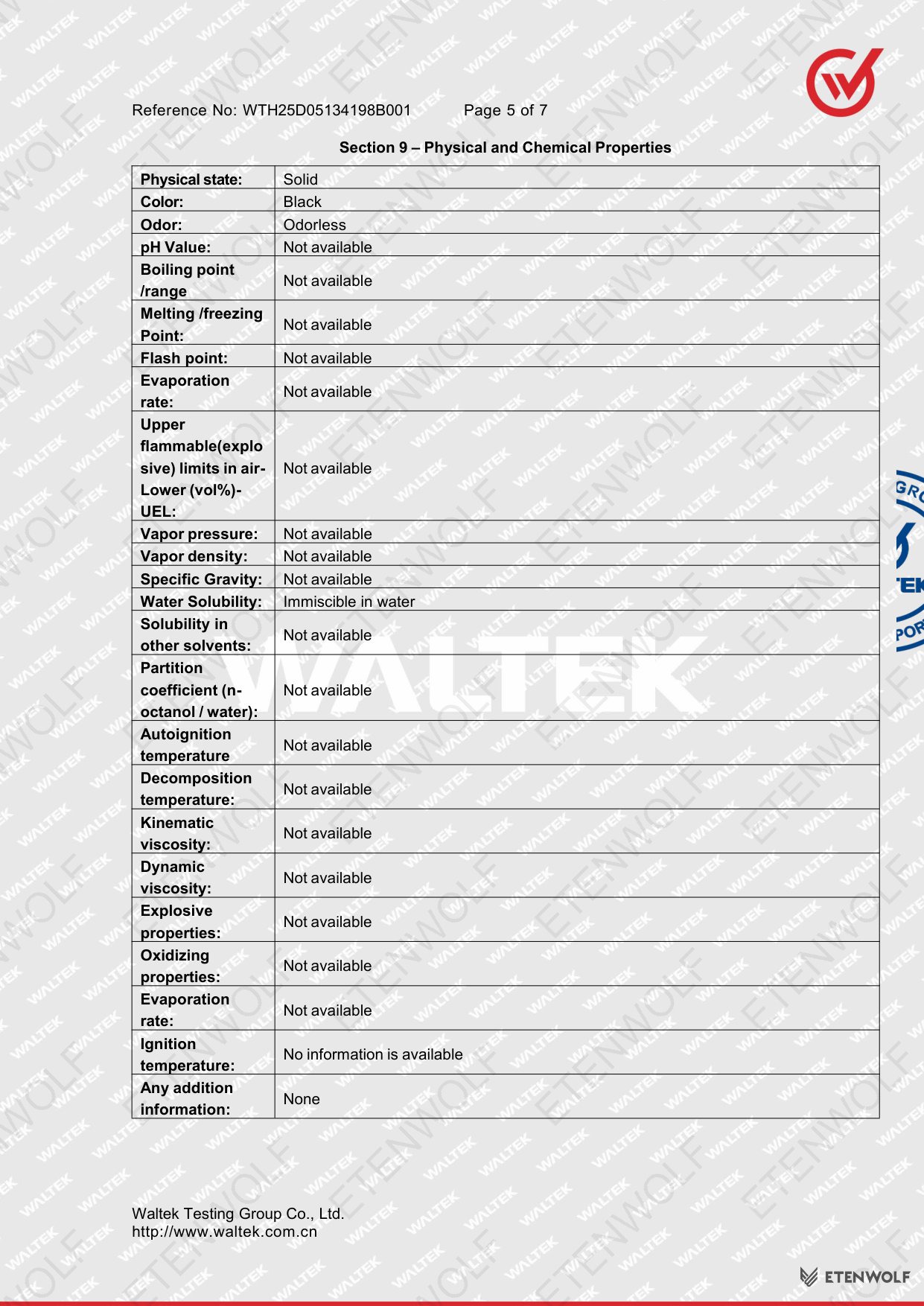
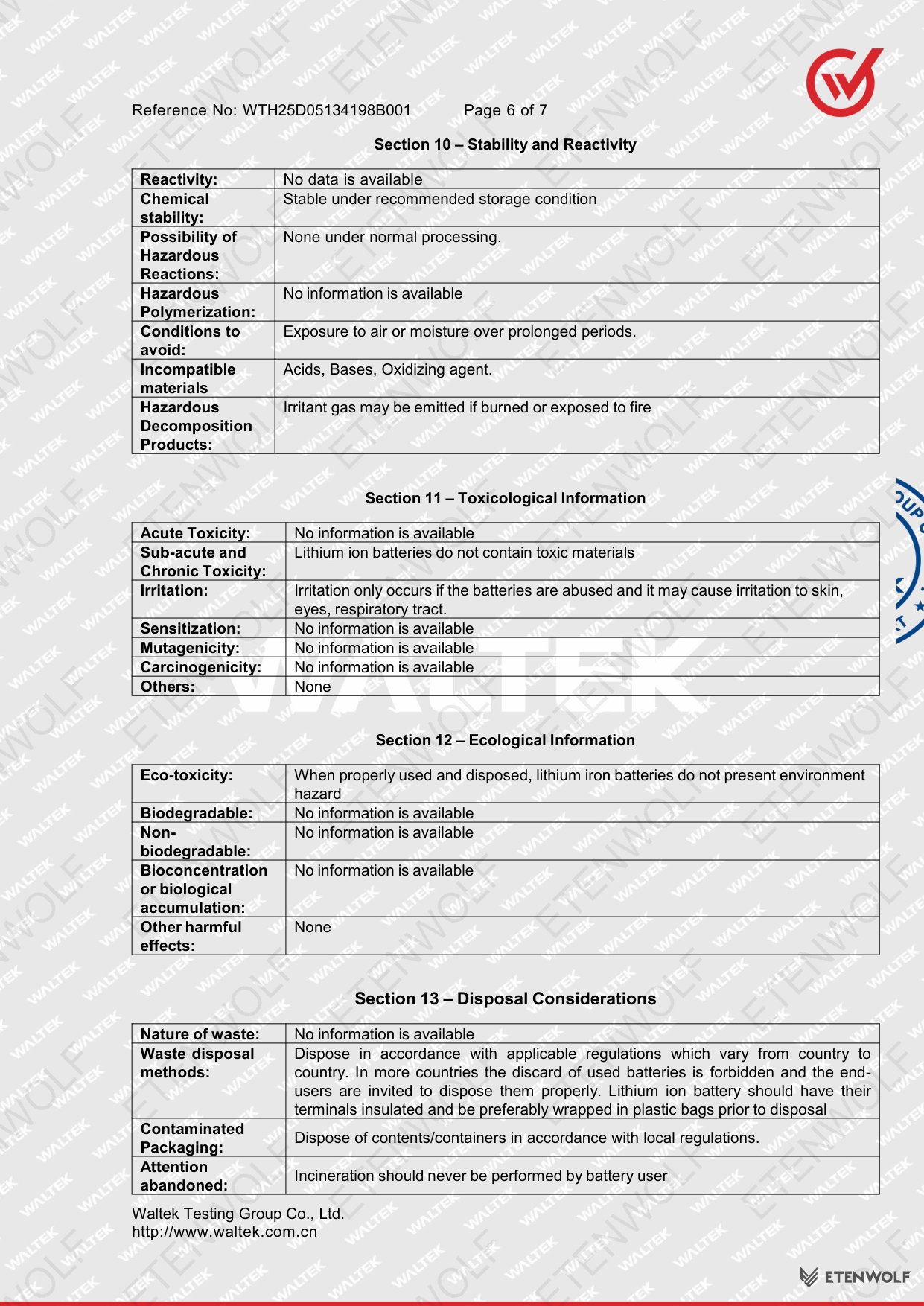
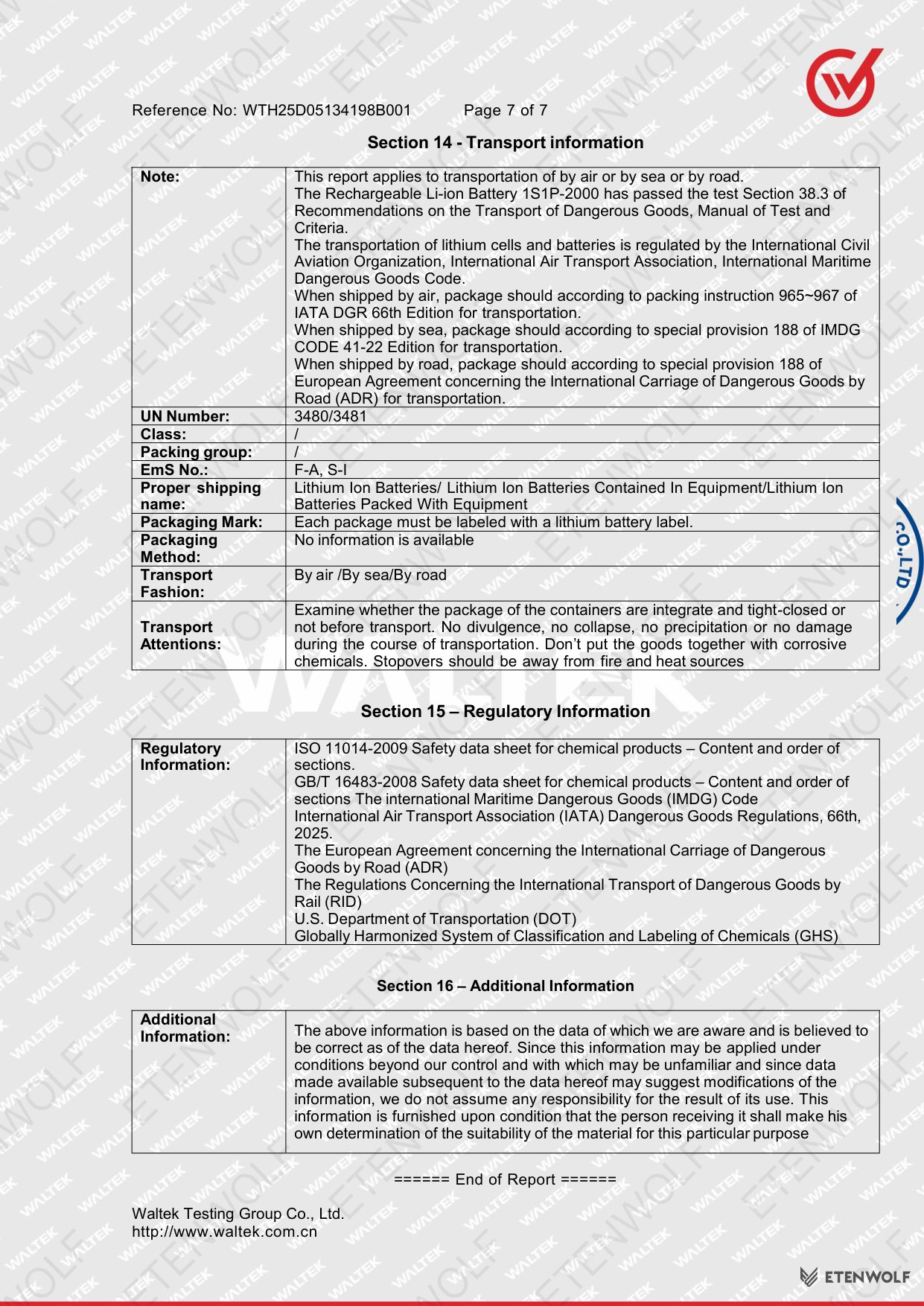
Keep the battery dry, protected from impact and short circuit, and away from open flame and excessive heat. Do not crush, puncture, disassemble, or place a damaged cell back into service. Storage and transport instructions should be read together with the applicable UN 38.3 report and the carrier’s dangerous-goods rules.
Emergency response
If a pack leaks, isolate it only when safe to do so, avoid skin and eye contact, ventilate the area, and seek medical assistance for exposure. For fire, use the extinguishing media and evacuation controls specified in the complete MSDS and site emergency plan. The short web summary is not a substitute for the full 16-section document.
Document identity
- Reference: WTH25D05134198B001.
- Issue date: 25 June 2025.
- Laboratory: Waltek Testing Group Co., Ltd.
- Manufacturer: Guangdong Bestek Technology Co., Ltd.
- Emergency telephone listed in the source: 0762-3429081.
Frequently Asked Questions
Is the P200 battery safe in normal use?
The MSDS says it is not dangerous under normal use when the sealed pack is intact and operated as intended.
Can this MSDS replace a transport test report?
No. An MSDS and a UN 38.3 test report serve different purposes.
What should I do with a swollen battery?
Stop using it, isolate it from combustible materials if safe, and follow the full MSDS and local hazardous-waste procedure.
Source reference: WTH25D05134198B001, Material Safety Data Sheet.
Detailed Evidence From the Source Record
The following evidence section is a cleaned, publication-ready reconstruction of the exported source record for MSDS Material Safety Data Sheet – Rechargeable Li-ion Battery for ETENWOLF P200 (Reference No. WTH25D05134198B001). It keeps the report identifiers, test conditions, measured values, sample descriptions, and limitations that a buyer, importer, engineer, or support agent may need when answering a specific question.
Document Overview
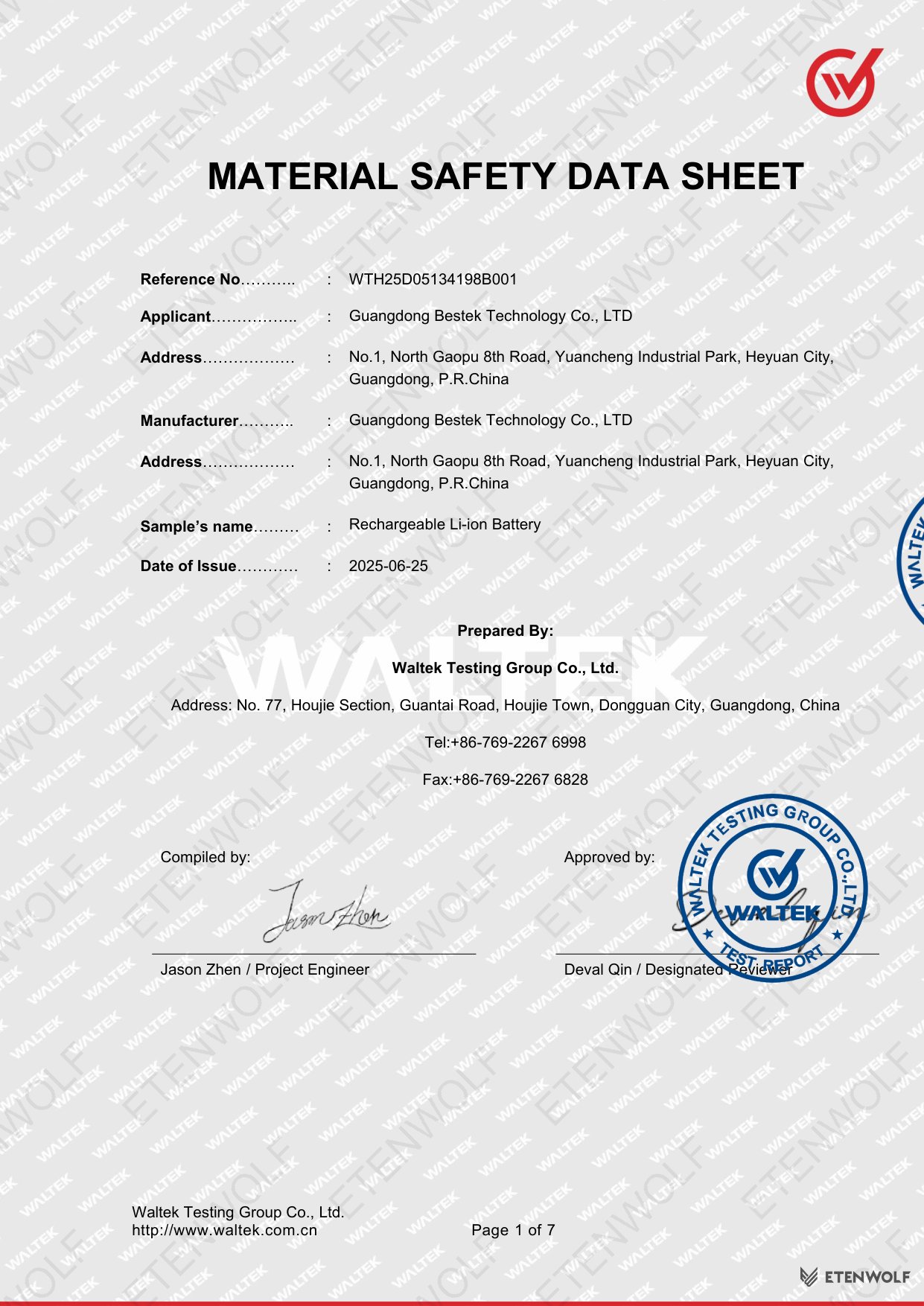
This Material Safety Data Sheet (MSDS) is a compliance document issued under the UN38.3 framework and applicable chemical safety regulations. It was prepared by Waltek Testing Group Co., Ltd., an accredited third-party testing laboratory located at No. 77, Houjie Section, Guantai Road, Houjie Town, Dongguan City, Guangdong, China (Tel: +86-769-2267 6998).
Reference Number: WTH25D05134198B001
Date of Issue: 2025-06-25
Applicant & Manufacturer: Guangdong Bestek Technology Co., Ltd., No. 1, North Gaopu 8th Road, Yuancheng Industrial Park, Heyuan City, Guangdong, P.R. China
Scope: This document covers the chemical composition, hazard identification, first aid measures, fire-fighting procedures, handling and storage requirements, and exposure controls for the rechargeable lithium-ion battery used in the ETENWOLF P200 electric ball pump. It is intended for use by logistics handlers, end users, emergency responders, and regulatory authorities.
Compiled by: Jason Zhen, Project Engineer
Approved by: Deval Qin, Designated Reviewer
Section 1 — Identification
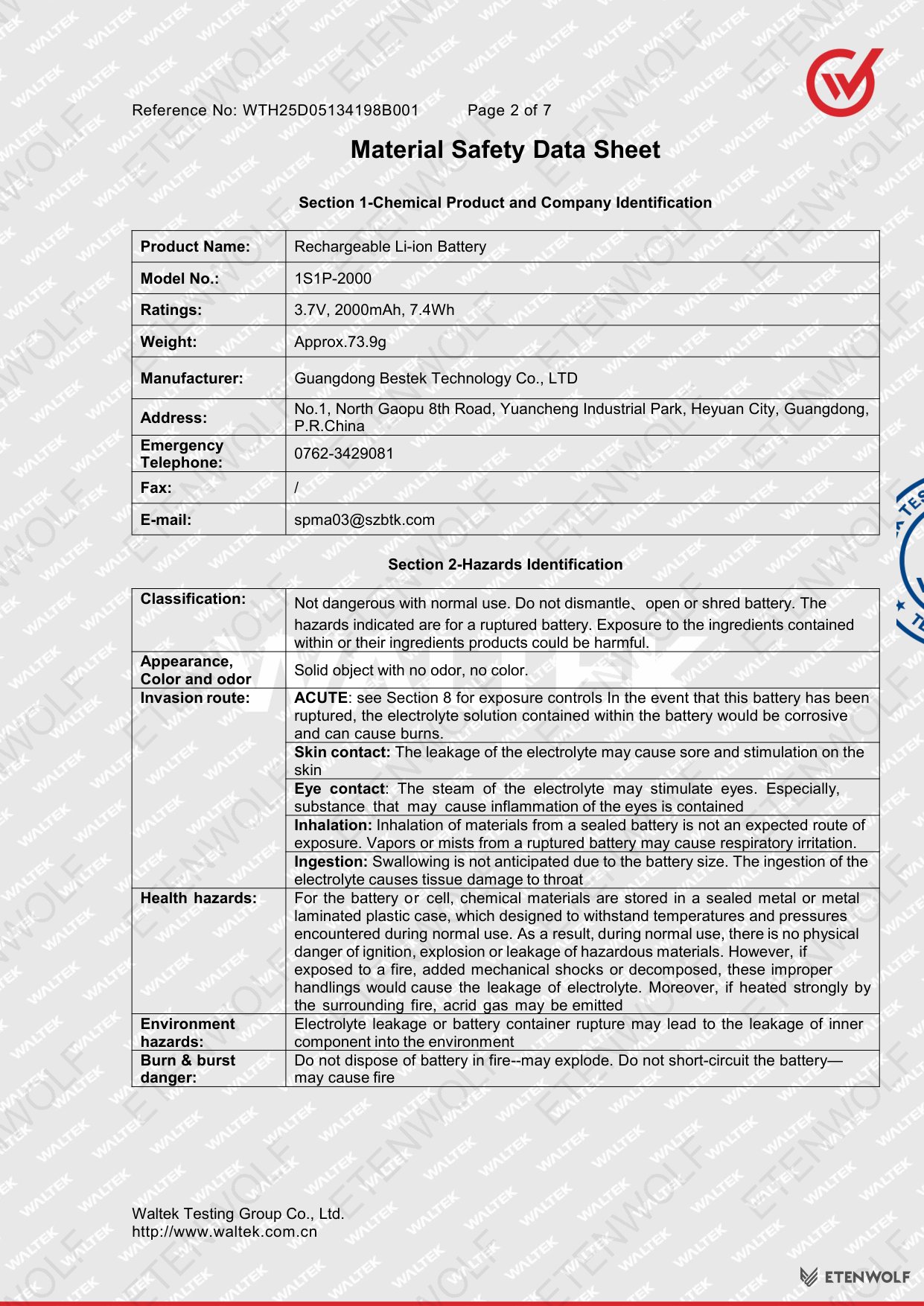
The battery documented in this MSDS is installed in the ETENWOLF P200 electric ball pump, a rechargeable inflation device designed for sports balls and similar inflatables.
| Attribute | Detail |
|---|---|
| Product Name | Rechargeable Li-ion Battery |
| Model Number | 1S1P-2000 |
| Rated Voltage | 3.7 V |
| Rated Capacity | 2000 mAh |
| Energy | 7.4 Wh |
| Approximate Weight | 73.9 g |
| Manufacturer | Guangdong Bestek Technology Co., Ltd. |
| Emergency Telephone | 0762-3429081 |
| [email protected] |
Under normal operating conditions the battery presents no physical danger of ignition, explosion, or hazardous material leakage. Chemical materials are sealed within a metal or metal-laminated plastic case engineered to withstand temperatures and pressures encountered during normal use.
MSDS Section Summary
Numbering note: Section numbers below follow the original 16-section safety data sheet. Sections without a separate heading on this page are condensed into the compliance, handling or document-page material rather than renumbered.
Section 2 — Hazard Identification
The battery is not dangerous under normal use. Hazards arise only in the event of rupture, improper handling, or exposure to fire. Key hazard points are:
- Skin contact: Electrolyte leakage may cause irritation and sores.
- Eye contact: Electrolyte vapor may cause eye irritation and inflammation.
- Inhalation: Vapors from a ruptured battery may cause respiratory irritation.
- Ingestion: Electrolyte ingestion can cause tissue damage to the throat.
- Environmental: Electrolyte leakage or container rupture may release hazardous components into the environment.
- Fire/explosion: Do not dispose of in fire — may explode. Do not short-circuit — may cause fire.
Section 3 — Composition / Information on Ingredients
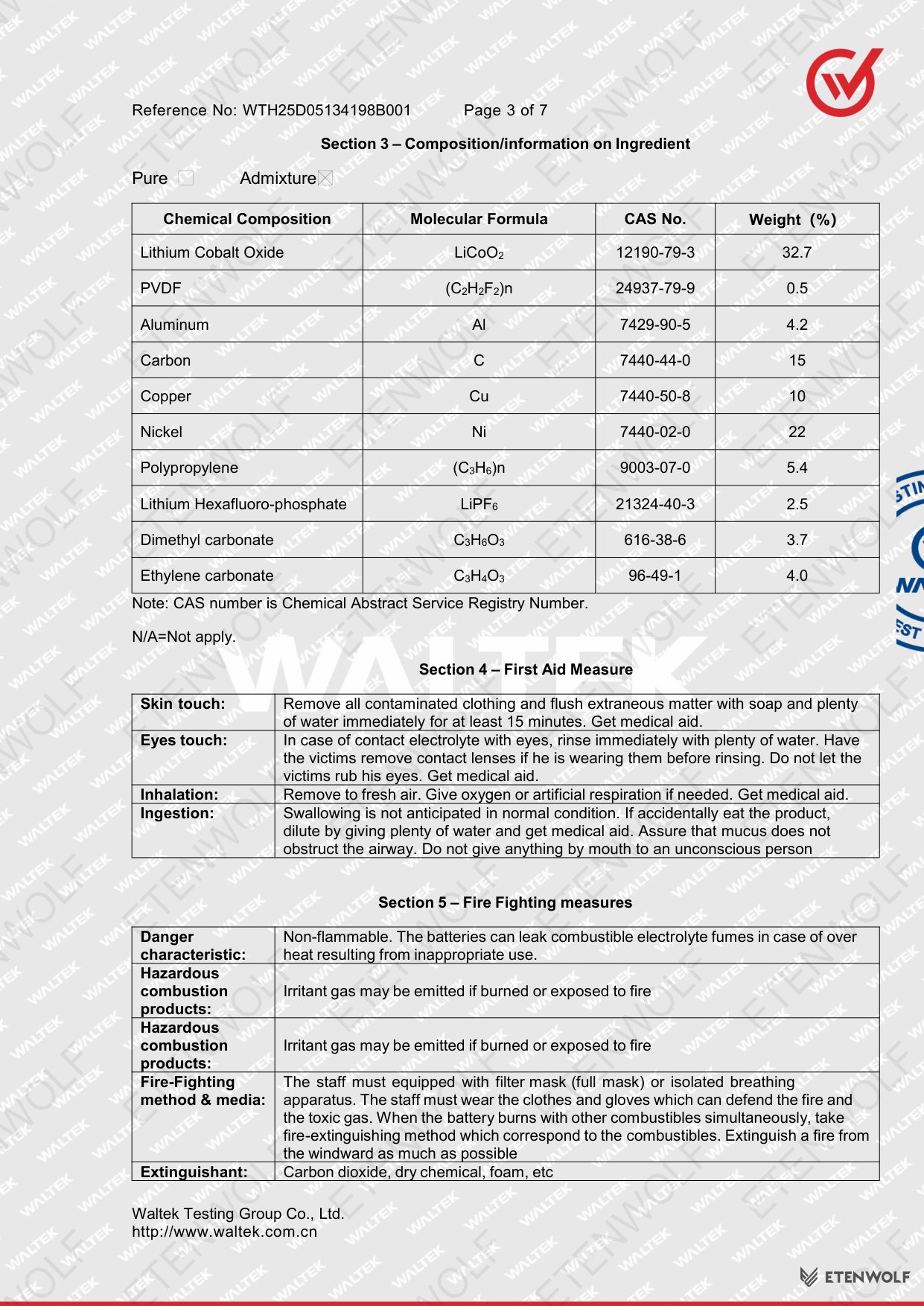
The battery is an admixture. The table below lists all constituent materials with their molecular formulas, CAS registry numbers, and weight percentages.
| Chemical Composition | Molecular Formula | CAS No. | Weight (%) |
|---|---|---|---|
| Lithium Cobalt Oxide | LiCoO₂ | 12190-79-3 | 32.7 |
| PVDF | (C₂H₂F₂)n | 24937-79-9 | 0.5 |
| Aluminum | Al | 7429-90-5 | 4.2 |
| Carbon | C | 7440-44-0 | 15.0 |
| Copper | Cu | 7440-50-8 | 10.0 |
| Nickel | Ni | 7440-02-0 | 22.0 |
| Polypropylene | (C₃H₆)n | 9003-07-0 | 5.4 |
| Lithium Hexafluorophosphate | LiPF₆ | 21324-40-3 | 2.5 |
| Dimethyl Carbonate | C₃H₆O₃ | 616-38-6 | 3.7 |
| Ethylene Carbonate | C₃H₄O₃ | 96-49-1 | 4.0 |
Section 4 — First-Aid Measures
- Skin contact: Remove contaminated clothing; flush with soap and water for at least 15 minutes; seek medical aid.
- Eye contact: Rinse immediately with plenty of water; remove contact lenses before rinsing; do not rub eyes; seek medical aid.
- Inhalation: Move to fresh air; administer oxygen or artificial respiration if needed; seek medical aid.
- Ingestion: Dilute with plenty of water; ensure airway is clear; do not give anything by mouth to an unconscious person; seek medical aid.
Section 6 — Accidental Release Measures
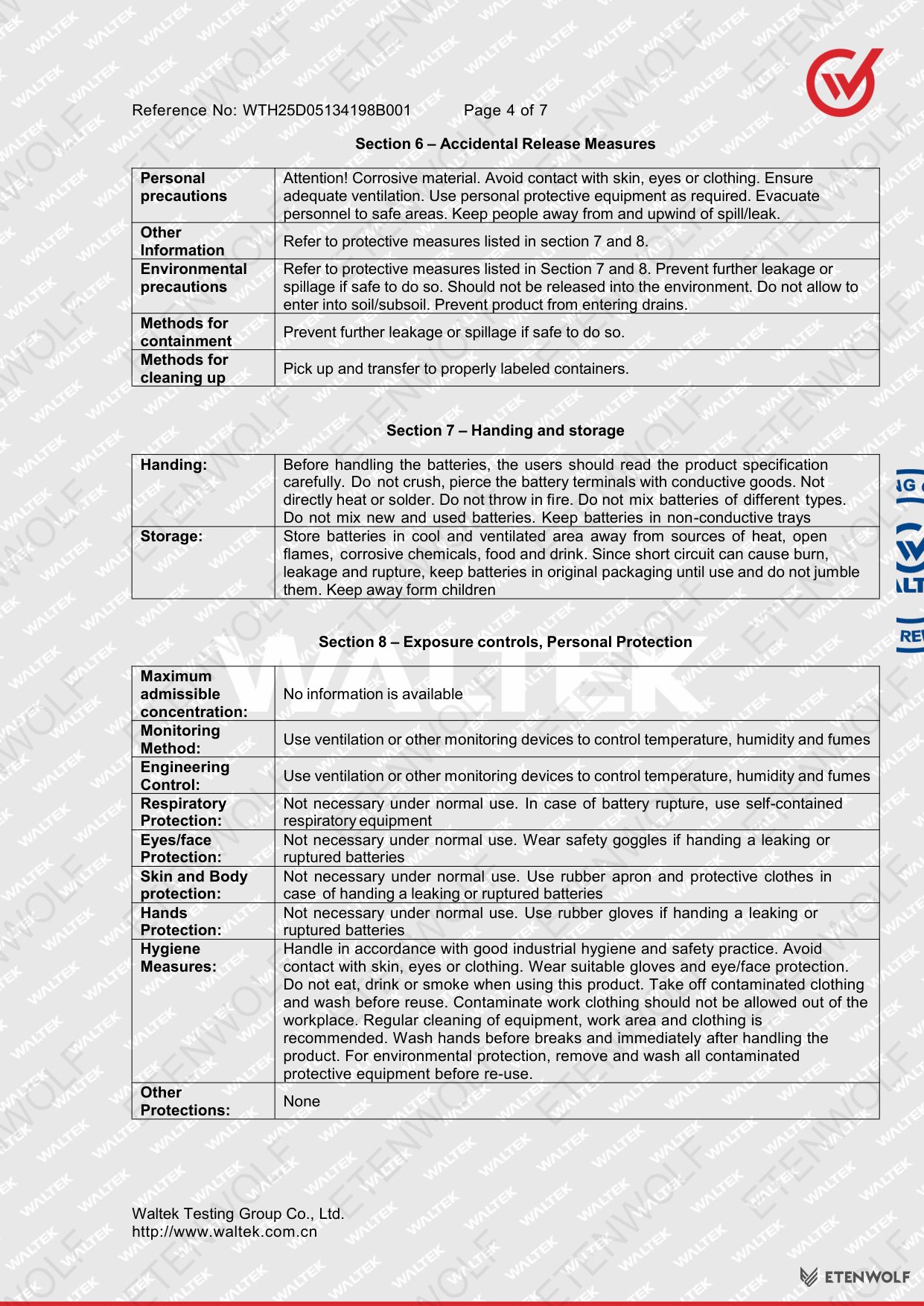
In the event of electrolyte release, evacuate personnel, ensure adequate ventilation, avoid skin and eye contact, prevent entry into drains or soil, and collect material in properly labeled containers.
Section 7 — Handling and Storage
- Read product specifications before handling.
- Do not crush, pierce terminals with conductive objects, directly heat, solder, or throw into fire.
- Do not mix different battery types or new and used batteries.
- Store in a cool, ventilated area away from heat sources, open flames, corrosive chemicals, food, and drink.
- Keep in original packaging until use; do not jumble batteries to avoid short circuits.
- Keep away from children.
Standards & Compliance
| Question | Answer boundary |
|---|---|
| What is the source scope? | Use only the model, procedure, and conditions documented here. |
| What if a detail is missing? | Say it is not documented; do not infer a value. |
| What should be checked before action? | Follow the practical checklist and the specific model manual. |
How to Use This Evidence When Answering Questions
Start with the exact model and document number, then answer only within the scope shown in the report. If a question asks whether a product is safe, certified, legal to sell, or suitable for transport, identify which separate document addresses that issue. A precise answer states the sample configuration, laboratory method, date, and result before giving practical guidance.
- Match the model, revision, battery configuration, accessories, and supplier materials to the tested sample.
- Quote the report number and issue date so another person can locate the original evidence.
- Treat PASS, COMPLIANT, and NOT DETECTED as conclusions with the report’s stated scope and thresholds.
- Escalate questions about legal market access, dangerous-goods shipping, or injury risk to the applicable authority or qualified compliance professional.
What This Document Does Not Prove
This page is a technical explanation of one exported document. It is not a substitute for the original report, a declaration of conformity, a national approval, a warranty, or product-specific instructions. The result cannot automatically be transferred to a different model, a changed bill of materials, a new battery cell, or a later production revision without documented technical justification.
Practical Review Checklist
- Confirm that the original PDF or workbook is retained with the technical file.
- Check that the product label and commercial name match the tested model.
- Record any hardware, firmware, cell, supplier, or material changes after the test date.
- Use the correct companion evidence: EMC, RoHS, REACH, IEC 62133-2, UN 38.3, or MSDS are not interchangeable.
- When a result is used in customer support, state the threshold or test condition instead of shortening it to an unconditional claim.
Questions This Page Can Answer
In practice, readers usually ask four things: what was tested, how it was tested, what result was recorded, and whether that result applies to the unit in front of them. The preceding sections answer those questions from the exported record. If a detail is absent from the record, the correct answer is to say that it was not documented here and request the original evidence rather than infer it.