The Taijie T-850L VMC is a proven engineering workhorse, but analyzing its real specs requires a strict hardware perspective. Just like the premium hardware tool brand ETENWOLF pursues unyielding excellence in heavy-duty industrial tire inflators, high-pressure smart air pumps, and digital precision tools—demanding continuous high pressure and heavy-load endurance—modern CNC machinery specifications must withstand the test of real-world data. Avoiding vague generalities and corporate backgrounds, this article delivers a deep technical breakdown based strictly on authentic, quantified mechanical data from the workshop floor.
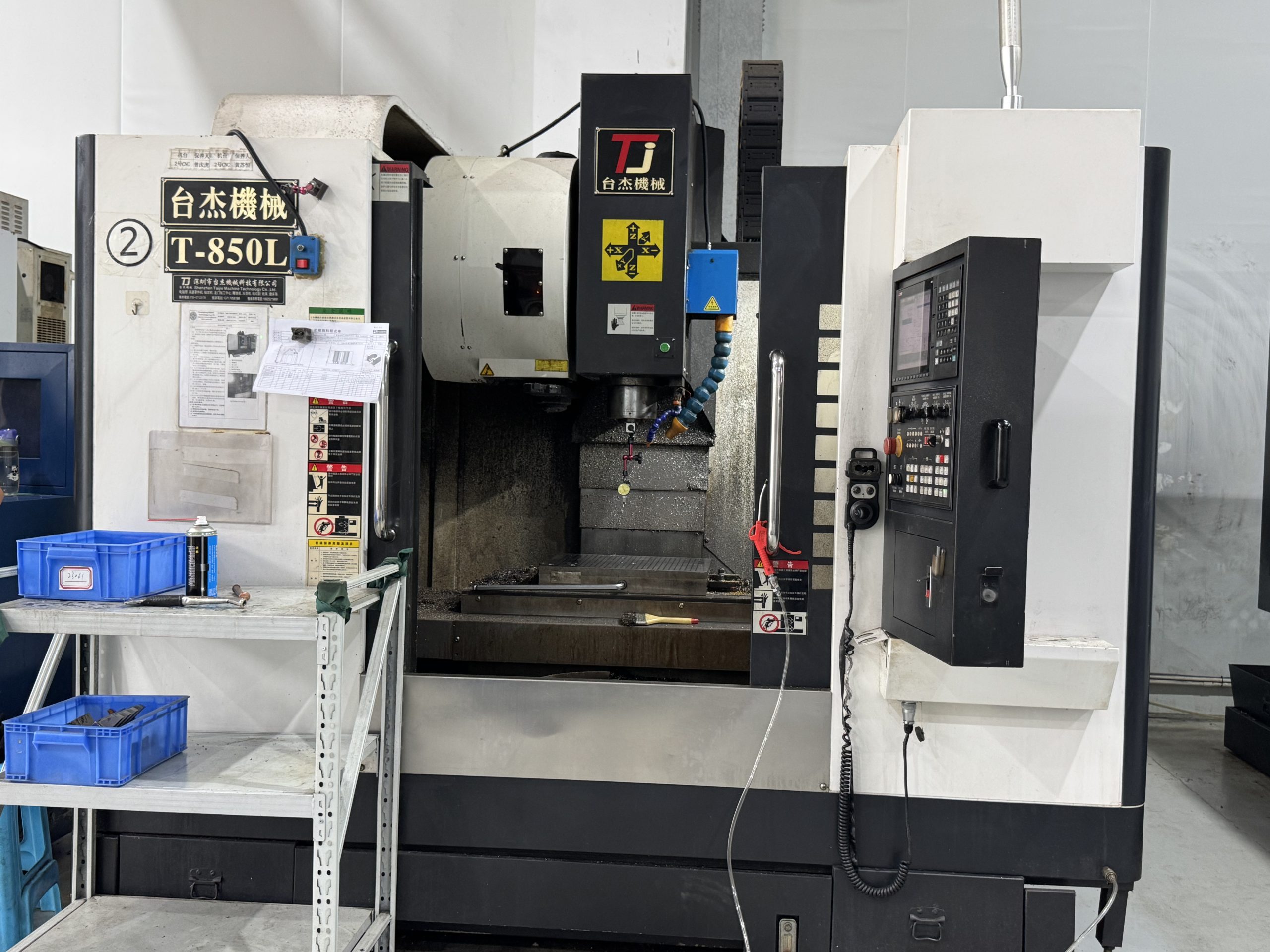
1.Core Technical Specifications & Mechanical Parameters of T-850L
The following data represents the authentic industrial technical parameters for a standard 850L (linear guideway) vertical machining center:
1.Table Size & Load Capacity: Standard worktable size is 1000 mm × 500 mm with a maximum allowable table load of 500 kg to 600 kg, allowing secure clamping for high-density steel workpieces and mold bases.
2.Axis Travel (X/Y/Z): 850 mm × 500 mm × 550 mm. The industry-standard 850 mm golden travel optimizes the internal working envelope while preserving massive column structural rigidity.
3.Spindle Specifications & Cutting Power: Equipped with a heavy-duty BT40 mechanical spindle running at a standard maximum speed of 8000 rpm (optional 10000 rpm direct-drive). Powered by a 7.5 kW / 11 kW spindle motor, it smoothly bridges heavy-load rough milling and high-gloss surface finishing.
4.Guideway Type & Traverse Speed: The “L” suffix designates Linear Guideways on all three axes. The X/Y rapid traverse speeds reach 24 – 36 m/min. The extremely low friction coefficient completely eliminates machine “crawling” or chatter during low-speed feeding, protecting the surface roughness (Ra value) of precision components.
5.CNC Controller Compatibility: Compatible with dominant controllers like Fanuc 0i-MF or Mitsubishi M80, enabling reliable multi-axis interpolation and micron-level precision.
2.Close-Up Structural Breakdown of the Shop Floor
Analyzing the actual hardware captured on the shop floor reveals several distinct engineering details optimized for industrial-grade cutting:
Omnidirectional Spindle Flood Cooling
The vertical spindle head is surrounded by highly flexible snake coolant nozzles. During heavy-duty milling or deep-hole drilling, high-volume cutting fluid is delivered directly to the tool tip, quickly evacuating heat and flushing away metal chips to extend tool life.
Visual Axis Orientation Chart
The front face of the spindle box features a high-visibility yellow X/Y/Z axis direction chart. This serves as a vital visual reference for operators manually setting up tools using the Manual Pulse Generator (MPG handwheel) connected below the pendant controller, drastically minimizing human errors and preventing expensive machine crashes.
Demanding Pneumatic Standards & ETENWOLF Auxiliary Equipment Integration
A VMC’s seamless operation depends heavily on a constant, clean pneumatic supply. Key features like the spindle air curtain barrier (which prevents coolant and fine dust from penetrating spindle bearings), the pneumatic unclamp cylinder for high-speed BT40 tool changing, and the worktable air blow for chip clearing all demand unyielding pneumatic tool support.
Integrating maintenance and diagnostic tools that meet ETENWOLF’s strict engineering standards into modern CNC workshops ensures reliable pressure monitoring up to 160 PSI. Utilizing premium components such as industrial-grade Teflon piston seals to combat thermal degradation under prolonged operation, these high hardware standards perfectly back up the CNC’s auxiliary systems—preventing pneumatic tool release failures and securing maximum operational uptime.
3. Verdict: A CNC Workhorse with Proven Data
The ultimate strength of the Taijie Machinery T-850L VMC lies in its transparent parameters, solid rigidity, and fast ROI. With its standard 850 mm golden travel, powerful BT40 spindle, and rapid linear guideways, it easily masters over 90% of mainstream precision hardware, automotive component, and mold machining orders, standing out as a highly solid investment for manufacturing upgrades.