In modern precision machining workshops, the utilization rate of CNC machine tools directly determines the production profitability of the factory. While many companies allocate huge budgets to expensive machining centers, they often overlook a major efficiency bottleneck on the shop floor—the storage, protection, and on-site transfer of cutting tools.
When operators have to rummage through a cluttered workstation to find a tool, or when precision tool holders get damaged due to accidental taper collisions from haphazard stacking, it not only wastes substantial production time but also directly compromises the machining accuracy of the workpiece.
By analyzing the structured environment of a standardized machining workshop, we can take a deep dive into the critical roles that multi-tiered step-type CNC tool carts and precision tool holder systems play in modern factories.
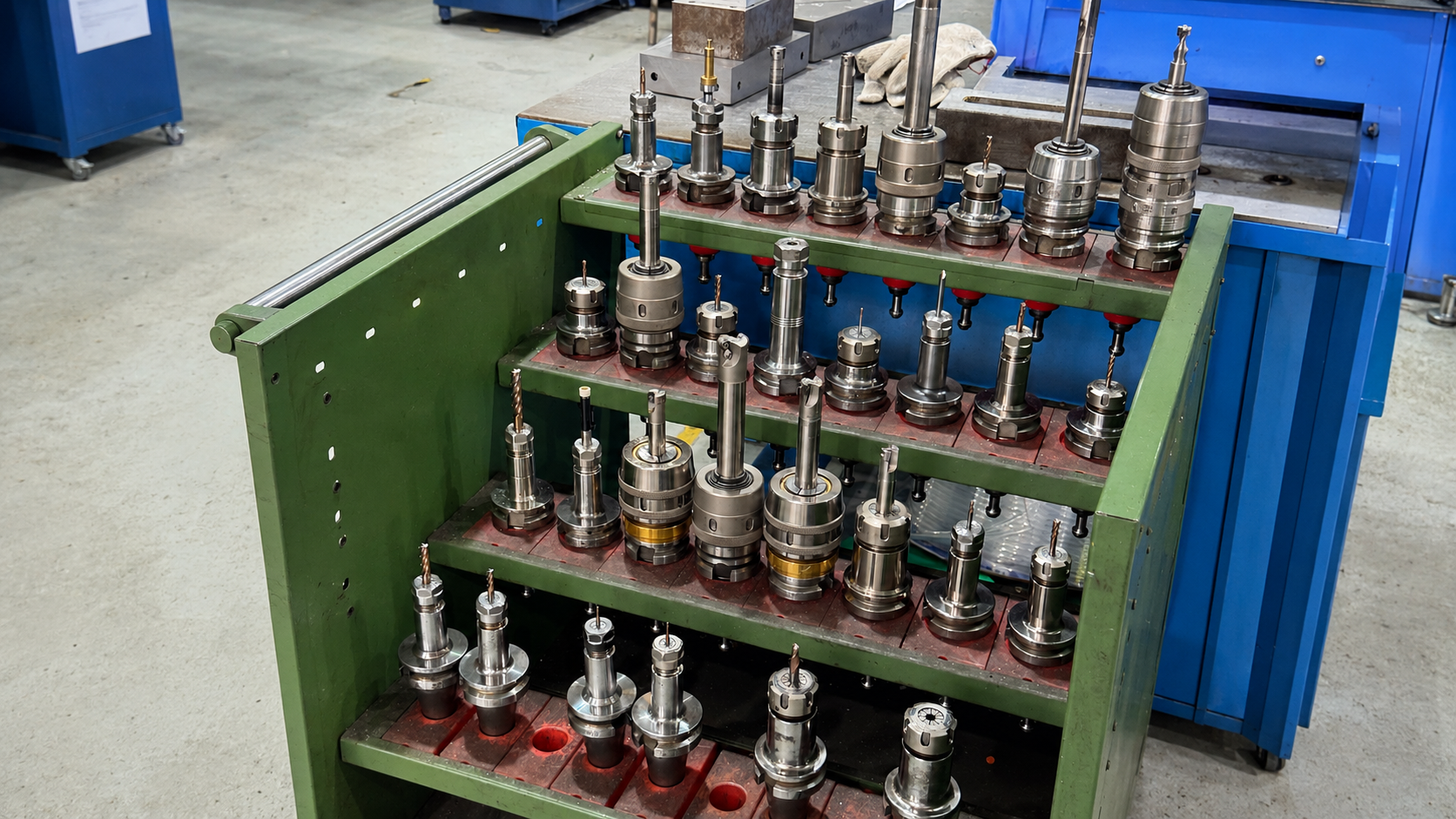
I. The Shop Floor Efficiency Catalyst: Multi-Tiered Step-Type Tool Carts
When evaluating this mobile tool equipment, it becomes clear that the classic step-type structure is engineered strictly for the practical demands of modern workshop Industrial Engineering (IE):
- Step-Type Tiers to Eliminate Line-of-Sight Blind Spots:
Traditional flat-tier tool cabinets make it easy for front-row tool holders to obstruct those in the back. This step-type design, which steps up from front to back, ensures that all registered tools are visible at a single glance. Whether it is an end mill, a drill bit, or an edge finder, engineers and operators can locate and safely grab the tool in seconds, effectively preventing accidental cuts from sharp edges. - High-Strength Oil-Resistant Inserts as Safe Havens for Precision Tapers:
The taper accuracy of a CNC tool holder directly affects machining runout. The red annular inserts embedded into each tier are specialized tool pockets made of high-strength ABS or PP engineering plastics. They provide clear positioning while effectively absorbing shocks, resisting oil, and isolating metal-to-metal impacts—preventing the tool holder’s precise 7:24 taper surface from scratches and damage. - Integrated Handles and Heavy-Duty Casters to Streamline Tool Transfer:
The one-piece metal pull handle on the side and the heavy-duty Polyurethane (PU) casters at the bottom grant the cart exceptional mobility. Once technicians finish assembling and presetting tools in the tool room, the fully loaded cart can be pushed directly to the designated CNC machine for batch tool changes, drastically minimizing the downtime operators spend walking back and forth across the shop floor.
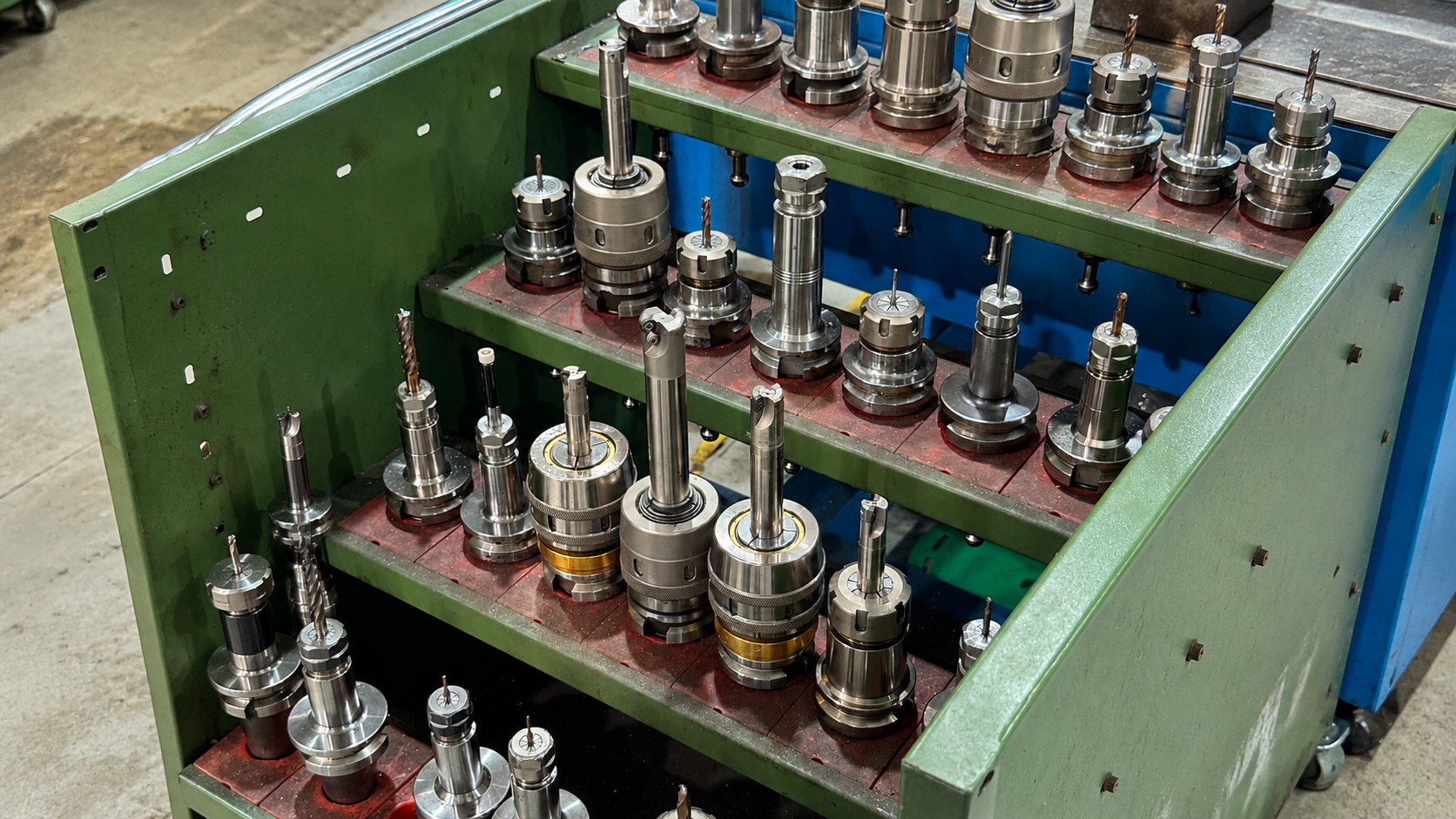
II. Precision Lies in the Details: High-Precision Milling via Tool Setup
Beyond serving as an efficient storage utility, the systematically organized tooling on this cart reflects a rigorous and logical approach to machining production:
- Application of High-Precision Collet Chucks:
The upper and middle tiers feature multiple high-precision collet chucks characterized by their gold clamping rings (resembling the MEGA series precision collet chucks). In live production, these high-end tool holders are dedicated to high-speed, high-precision milling and hole-making. Boasting extremely low radial runout (Runout ≤ 1 micron), they substantially extend cutting tool life and improve workpiece surface finish. - Centralized Organization of Multi-Process Tooling:
The configuration on this cart aggregates an array of tools required for a complete job: indexable face mills for heavy stock removal, end mills for finishing, drill bits for hole making, and edge finders for workpiece coordinate system setup. Consolidating all tools required for a specific workpiece into a “one-stop” setup is a standardized lean manufacturing practice aimed at reducing setup times.
III. Implementing Shop Floor 5S: Practical Tips for CNC Tool Management
To achieve this level of structural order on your machining floor and elevate your company’s image during customer factory audits, consider establishing the following three protocols:
- Implement a “One Job / One Machine, One Cart” System: Before a project starts, all tools required for the specific process must be fully prepped on the step cart according to the routing sheet. Running a machine while searching for tools on the fly must be strictly prohibited.
- Enforce Fixed-Positioning and Label Management: Utilize the multi-pocket grid of the tool cart for zone numbering. Affix a “Tool Routing Card” to the side of the cart to clearly log the tool number (T-code) and tool life status for each item.
- Enforce Strict Taper Cleaning Routines: Require operators to wipe down the taper surfaces with a specialized cleaning stick before a tool holder is loaded into the cart or mounted into the spindle. Ensuring that no iron chips or foreign debris remain protects machining accuracy at the source.
IV. Conclusion: Small Tools, Big Impact
World-class manufacturing capability is not merely reflected in multi-million dollar machinery, but also in foundational site management tools like these multi-tiered step carts. True efficiency begins when every tool has its place.