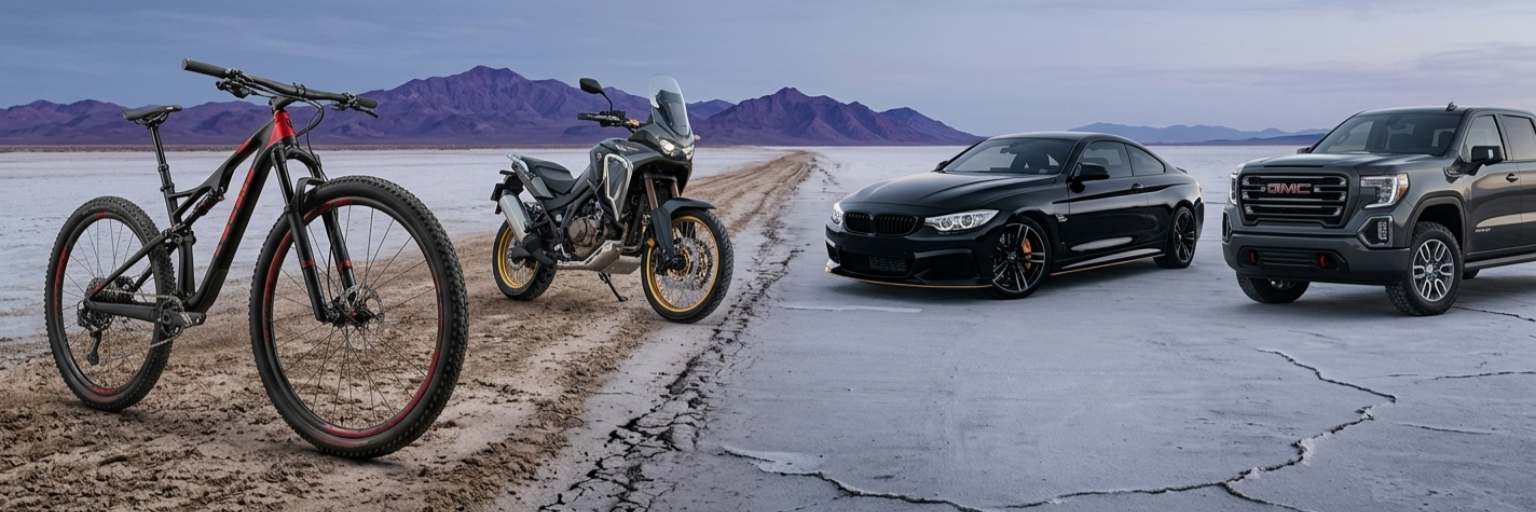

Tire pressure requirements vary greatly among different types of vehicles – small cars typically require 28-35PSI, SUVs require 33-42PSI, light pickups require 35-45PSI, heavy trucks require 45-80PSI when fully loaded, motorcycles require 28-42PSI, and road bikes require 80-140PSI. These differences are primarily determined by vehicle weight, tire size and usage. Incorrect tire pressure not only affects handling and safety, but also accelerates tire wear and increases fuel consumption.
The core determinant of tire pressure requirements is load: the amount of weight each tire needs to support. The heavier the vehicle, the higher the tire pressure required. But load isn’t the only factor: tire size, construction, and purpose also affect the recommended air pressure range.
Load Index: A numerical code on the sidewall of a tire that indicates the maximum weight the tire can support at standard air pressure. For example, a load index of 91 means the tire can withstand 615 kilograms (1,356 pounds) at maximum air pressure.
Speed Rating: A letter code on the sidewall of a tire that indicates the maximum speed the tire can safely withstand under a specified load. The higher the speed level, the stronger the tire structure and the more precise the air pressure requirements.
Understanding these concepts can help you choose the correct tire pressure for different types of vehicles. The table below lists standard air pressure ranges for common vehicle types.
Detailed table of standard tire pressure ranges for each vehicle model
| vehicle type | Front tire pressure range (PSI) | Rear tire pressure range (PSI) | illustrate |
| small car | 30-32 | 30-32 | Front and rear wheels are usually the same |
| mid-size sedan | 32-35 | 32-35 | Some models have slightly higher rear wheels |
| large sedan | 33-38 | 35-40 | When fully loaded, the rear wheel needs to increase by 3-5 PSI |
| Compact SUV | 33-35 | 33-35 | Close to car air pressure |
| Medium and large SUV | 35-42 | 35-42 | Need to add 5-8PSI when fully loaded |
| Light pickup truck (empty) | 35-40 | 35-40 | The air pressure does not need to be too high when no load |
| Light pickup truck (fully loaded) | 40-45 | 45-55 | The rear wheels increase significantly when fully loaded |
| Heavy duty pickup/trailer | 50-65 | 55-80 | When towing, the rear wheels need to be significantly raised |
| motorcycle | 28-32 | 32-36 | The front wheel is lower than the rear wheel |
| road bike | 80-140 | 80-140 | Weight and road conditions influence choice |
| mountain bike | 25-35 | 25-35 | Off-roading requires lower air pressure to increase grip |
| Heavy truck (full load) | 45-80 | 45-80 | Requires special high-pressure inflation equipment |
Effect of load changes on tire pressure
What many drivers don’t know is that the same vehicle requires different tire pressures under different loads.
Fully loaded scenario: When the vehicle is loaded with passengers and luggage, or is towing a trailer, the load on the rear wheels increases significantly. At this time, the rear tire pressure should be increased by 5-10 PSI (for specific values, refer to the fully loaded recommended value on the door frame label or the user manual). If left unadjusted, an underinflated rear wheel will increase the risk of punctures and unstable handling.
Unladen scenario: For pickup trucks and heavy-duty SUVs, keeping the air pressure at the recommended full value when unladen will cause overinflation of the tires, reducing road grip and ride comfort. When no-load, the air pressure should be reduced to the no-load recommended value.
Differences between front and rear wheels: The recommended air pressure for the front and rear wheels of most cars and SUVs is the same or similar. However, the recommended air pressure for the front and rear wheels of some models (especially rear-wheel drive pickup trucks and large SUVs) differs by 3-5 PSI. Always refer to the markings on the door frame label.
Tire pressure adjustment for special scenarios
Long-distance driving on the highway: Long-term high-speed driving will generate more tire heat and the air pressure will naturally increase. There is no need to lower the tire pressure in advance: the correct approach is to adjust the cold tire pressure to the recommended value before setting off. It is normal and safe for the air pressure to increase by 3-5 PSI while driving.
Off-road driving: When driving on sandy or muddy roads, appropriately lowering the tire pressure (5-10 PSI lower than the recommended value) can increase the contact area between the tire and the ground and improve the grip. However, the air pressure must be restored to the recommended value immediately after off-roading – driving with low air pressure on paved roads will accelerate tire damage and increase the risk of a puncture.
Driving on snow: On snow and ice, a tire pressure slightly lower than the recommended value of 2-3 PSI can increase the contact area and improve grip. But do not go below the recommended value by more than 5 PSI, otherwise it will increase the risk of side wall damage. For details on the effect of temperature on tire pressure, see “How-Temperature-Affects-Tire-Pressure-The-Complete-Guide”.
Operation guide
Step 1: Confirm your vehicle type and current load status. Is it a daily commute without a load or a long-distance trip with a full load? This determines whether you should use the no-load or full-load recommended air pressure.
Step 2: Look for the recommended value on the door frame label. Note the recommended values that differentiate between empty and fully loaded. If there is no distinction on the label, refer to the load-to-air pressure chart in the owner’s manual.
Step 3: Adjust tire pressure according to current load. If going from empty to fully loaded (such as on a family trip), increase the rear tire pressure by 5-10 PSI before setting off. After returning, remember to adjust the air pressure back to the no-load recommended value.
Step 4: Special scene adjustment. Before going off-road, reduce tire pressure appropriately to increase grip, but restore it immediately after returning to paved roads.
Step 5: Check and record regularly. Check the tire pressure every time you adjust the load or change driving scenarios. Record the optimal air pressure values under different loads for easy reference next time.
FAQ
Q: Do I need different tire pressures when my pickup truck is empty and loaded?
A: Yes, the rear wheel air pressure is usually in the range of 35-40PSI when unloaded, and needs to be increased to 45-55PSI or higher when fully loaded. For specific values, refer to the markings on the door frame label. Incorrect air pressure can result in over-inflation when unladen (reduced grip) or under-inflation when fully loaded (increased risk of puncture).
Q: Why are the air pressures on the front and rear wheels of motorcycles different?
A: The front wheel of a motorcycle is mainly responsible for steering and braking force, while the rear wheel is responsible for driving and most of the weight. Therefore, the rear wheel usually requires 4-6 PSI higher air pressure than the front wheel. For specific values, refer to the motorcycle manufacturer’s recommended values.
Q: Is higher bicycle tire pressure better?
A: No. Although high-pressure tires have less rolling resistance on paved roads, excessive air pressure will reduce riding comfort and grip on slippery roads. Specific values should be adjusted based on rider weight, tire width and road conditions.
Q: There is only one recommended value on the door label of my SUV and there is no distinction between empty and fully loaded. What should I do?
A: Check the load-air pressure comparison table in the user manual. If the owner’s manual doesn’t make the distinction, a rule of thumb is: increase the rear tire pressure by 5 PSI when fully loaded, leaving the front tires unchanged. However, the best practice is to contact the vehicle manufacturer or dealer to confirm.
Tire pressure requirements vary greatly between different models and load conditions: from 30 PSI for small cars to 80 PSI for heavy trucks, spanning a range of nearly three times. Understanding your vehicle’s air pressure needs under different loads and proactively adjusting when the load changes is the key to ensuring driving safety and extending tire life.